Is Luka Doncic is Having the Most Embarrassing Summer Ever for a Professional Athlete from a PR Standpoint?
Sometimes life’s biggest changes come only when you’ve lost everything you thought was untouchable. Luka Dončić, once the golden child of the Dallas Mavericks, now wears a new uniform and a new body—gracing the cover of Men’s Health and flooding social media with images and videos that would make any fitness influencer envious.
The Great Makeover and a Glaring Irony
There are glowing testimonials about his two-a-day workouts, low-sugar, gluten-free diet, and 16-hour fasts. For fans who followed his years in Dallas, the message rings clear: look at me now.
But beneath the shiny new exterior and viral workout clips lies a narrative as awkward as a break-up Instagram post after months of ignoring your partner’s complaints.
Let’s be honest: Luka’s “revenge body” isn’t just a summer fitness story. It’s a case study in missed opportunities, misplaced pride, and the surreal optics of only fixing a glaring problem once it’s cost you everything.
If superstar athletes are supposed to be the role models for discipline and motivation, what does it say when it takes a trade and a public fall from grace for a generational talent to finally get serious about fitness?
Exhibit A: The PR Parade—When Marketing Tries Too Hard
You can picture Luka’s new PR team as mechanics working feverishly to tune up a race car that never left second gear until it was sold. Instagram posts showcase him pumping iron, sprints on courts in Croatia, dramatic before-and-after photos, all set to the thumping soundtrack of redemption.
There are magazine features filled with detailed accounts of Luka’s “intense” workouts, specifics about his strict intermittent fasting, hundreds of grams of daily protein, and candid quotes about self-improvement.
According to Sports Illustrated, when one reporter even joked to Luka that he should mail the Dallas Mavericks a copy of Men’s Health; Luka smirked, “They probably saw it. I don’t have to worry about that.”
But this orchestrated campaign is as subtle as a used-car salesman gushing over a “brand new” vehicle that was just detailed to hide the dents. Luka’s PR team wants the sports world to marvel at his turnaround.
They want his image resuscitated so badly you can almost see the choreography: the media tour, the carefully crafted social posts, the hero’s narrative of “bettering himself.” It’s all engineered to reframe his story from cautionary tale to comeback king.
Yet here’s the awkward part—the campaign feels a little like fixing the barn doors after the prized horse has galloped off into Lakers gold.
For years, the Mavericks pleaded with Luka to stay in shape: to manage his weight, focus on his diet, and put in the off-court work that would keep him healthy and maximize his considerable gifts.
Rarely has a superstar’s transformation felt so much like an admission of guilt—proof that the criticisms he shrugged off as a Maverick were justified all along.
Exhibit B: The Ghosts of Dallas—Missed Warnings and Self-Inflicted Wounds
Let’s draw an analogy: imagine being paid millions to keep your house clean, but only when your landlord throws you out do you finally buy cleaning supplies and hire a maid service.
That’s what happened with Luka. The Mavericks, desperate to build a championship culture, made moves, gave interviews, and dropped hints—sometimes less than subtly—about their franchise player’s need for better fitness.
Coaches, front office staff, and even teammates commented in hushed tones about his extra pounds, his recurring injuries, and the obvious impact on his durability.
Luka wasn’t just a little out of shape. Reports circling at the time of his trade put his weight at nearly 270 pounds—over 40 pounds above his NBA listing.
Conditioning was no longer a minor critique, but a looming crisis influencing the Mavericks’ entire future. Think of a race car built for the Indy 500 that insists on running laps on flat tires.
Eventually, something’s got to give—and for Dallas, it was patience.
The decision to trade Luka, after he’d just led the team to the NBA Finals, left fans dumbfounded. The Mavericks’ leadership, notably general manager Nico Harrison, explained the move was driven by a desire to improve team defense, upgrade versatility, and look to the future.
But the elephant in the room, stated both openly and through front office leaks, was Luka’s unwillingness to meet the team’s standards for fitness and self-care—standards expected of anyone being paid north of $40 million per year.
Luka’s inability (or unwillingness) to change became too big for Dallas to ignore.
To make matters more awkward, Luka had public brushes with the consequences of his lifestyle. The most viral illustration came when Michael Finley, a Dallas executive, calmly took a beer out of Luka’s hands on camera after a playoff win.
The message was clear as a parent confiscating candy from a child before dinner—this isn’t what you’re supposed to be doing, especially with the cameras rolling.
Yet in Dallas, these moments were met with shrugs and excuses. Luka was too important, too beloved, too talented—until he wasn’t.
Exhibit C: The Trigger—Change After Consequence
There’s a certain universal shame in only changing your habits once there’s nothing left to lose. Luka Dončić did not start fasting sixteen hours a day and hitting supersets because of some internal epiphany.
It seems like he only did it because he’d been kicked out of the club. Dallas, which had stuck by him through injuries, criticism, and plateaued seasons, finally decided his reluctance to get in shape was too expensive—and too detrimental—to tolerate.
How many times had the Mavericks hinted, asked, or begged for this change? They invested years and millions hoping that their superstar would do what any professional—certainly one paid more than the GDP of a small country—should do: take care of his body.
Instead, the weight gain compounded, the nagging injuries mounted, and the whispers about his dietary and social habits became too loud to ignore.
Am I the only one who thinks that it is deeply embarrassing—not just for Luka, but for the notion of sports professionalism—when it takes a trade, public humiliation, and the loss of a max contract for a superstar to finally buy into the program?
I mean think about it like this, it’s similar to a student who starts turning in homework only after being held back a grade—not evidence that the school was mistaken, but rather that the student finally faced consequences too great to ignore.
Now, in Los Angeles, Luka is the poster boy for “revenge shape.” The irony should not be lost on anyone: he is doing precisely what the Mavericks always wanted, but only because they’re no longer footing the bill.
It’s the PR equivalent of burning the midnight oil studying for an exam after you’ve already failed the class—noble, but a little late.
Exhibit D: The Myth of Proving Anyone Wrong
Luka, for his part, has reveled in the attention of his new lifestyle, playing coy about sending the Mavericks a copy of his Men’s Health cover and delighting in media speculation about “proving his doubters wrong.”
His fans, ever loyal, rush to defend him on social media, hurling accusations at the Mavericks and crowning Luka as the winner of this offseason divorce.
But if you scrape away the hashtags and highlight reels, Luka isn’t proving Dallas wrong—he’s proving them heartbreakingly right. The Mavericks’ frustrations about his commitment and conditioning were not merely smokescreens.
As time goes on Luka Doncic seems to be unknowingly proving that they were real, repeated, and eventually the demise of his time in Texas.
That Luka only chose to get in shape after being traded is a backwards victory lap—the equivalent of fixing the broken fence the day after your prized dog runs away.
Luka and his supporters frame his offseason as motivation, redemption, and a hint at the great things to come. The truth is more uncomfortable: his surge of discipline is, above all, an admission that Dallas’s patience was wasted.
Imagine a fireman who only learns to use the hoses after the house burns down—it’s great that they can do the job now, but you cannot ignore the irreversible loss that prompted the change.
For all the social media likes and brand endorsements, the timeline cannot be erased: the Mavericks asked Luka to take his fitness seriously. He refused. They traded him. Only then did he listen.
Exhibit E: Legacy and Accountability—The Cost of Waiting Too Long
Superstars—the ones we remember, the ones who last—often differentiate themselves by their willingness to sacrifice comfort for greatness, to hold themselves accountable even when no one can make them.
Luka Dončić’s saga is a warning that talent alone is not always enough, and that entitlement without responsibility is a dangerous mix for both player and franchise.
This might go over some people’s heads, but another analogy that comes to my mind: a championship team is like a rowboat.
Every person, especially the star, has to pull their weight. The Mavericks’ boat was sinking, and while Luka was indispensable as an oar, he also became too heavy a passenger for the vessel to stay afloat.
When he finally jumped ship, and the Mavericks filled his seat with someone row-ready (Anthony Davis), only then did Luka start paddling in earnest—for a new team.
The embarrassment is not in the improvement itself—after all, growth should be celebrated. The embarrassment is in what it took to spark it.
Luka had to lose millions, a city’s adoration, and his sense of untouchability before he seemingly embraced what was always within reach. It’s a masterclass in “coulda, shoulda, woulda.”
Worse still, Dallas did not want to let him go. It would have been easier, quieter, and better for business to keep Luka, sign the supermax extension, and build around him indefinitely.
General manager Nico Harrison has seemingly said in various way that he was forced into the trade by Luka’s resistance—not just on defense and effort, but in physical preparation and reliability.
Dallas’s “victory” in the trade is not yet complete; only time will tell if they can build a new winner. But in the court of short-term PR optics, Luka’s glowing up after getting dumped is as embarrassing as it gets for an athlete of his caliber.
A Summer to Remember, for the Wrong Reasons
This summer will be remembered in NBA circles not just for Luka Dončić’s body transformation, but for the glaring questions it raises about motivation, accountability, and professional pride.
For all the before-and-after shots and feel-good features, no amount of marketing can erase the fact that Luka sat on the winning lottery ticket for years and only cashed it when forced to.
It’s great, of course, that Luka is finally doing what every franchise dreams their star will do. It’s just bittersweet—and undeniably embarrassing—that the wake-up call came only after Dallas made the devastating decision to show him the door.
If you’re writing the story of the 2025 NBA offseason, don’t be fooled by the glossy magazine covers. This was the summer Luka Dončić proved, more than ever, that sometimes it takes losing everything to finally find your best self—and that’s not a story worth celebrating so much as studying, lest it happen again.
Until Luka’s new dedication translates into a championship with the Lakers, the Mavericks have every right to feel vindicated—for now, they hold the upper hand in the trade, and Luka’s summer makeover is yet another plot twist in a saga of potential unfulfilled, at least until proven otherwise.
Explore Related Articles
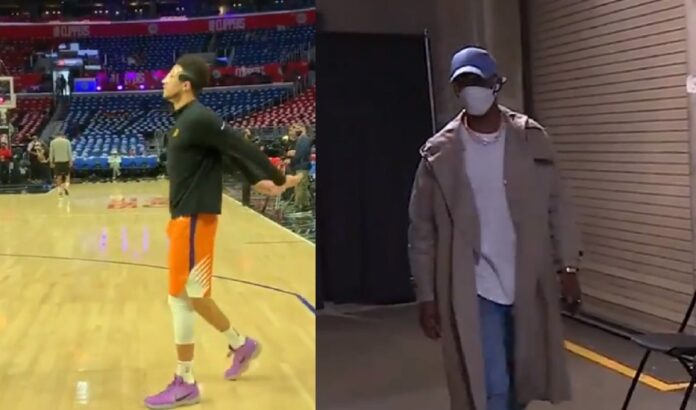
Broken Nose Face Mask Devin Booker and Trench Coat Chris Paul...
Clippers vs Suns Game 3 is almost set to start, and fireworks are already in the air with some new changes to Suns lineup. Broken nose Face mask Devin Booker and trench coat Chris Paul were seen arriving to Clippers arena setting social media ablaze.
Devin Booker broke his nose...
AD Injury Curse Real? Lakers Fan Named Anthony Tears Achilles During...
The Los Angeles Lakers have been dealing with injuries to their star player Anthony Davis for most of his tenure with the franchise. Davis, who has a history of various ailments, has missed a large percentage games over the past few years for endless reasons, some that leave people...

Anthony Edwards Exposed By Pro Madden Player AB For Owing $22K...
Anthony Edwards may be a millionaire now, but it appears he still won't pay you money that he owes. In a viral twitter post pro madden player 'AB' exposed Anthony Edwards owes him $22K in unpaid bets, and is refusing to pay up. To prove his claims AB leaked...